Traveling with an infant on Air Canada feels like a true test of a parent’s packing geometry, but the airline makes it surprisingly manageable. If your little one is under two, they can fly on your lap for free within Canada and to the U.S., while international trips usually cost about 10% of the adult fare. The real lifesaver is the baggage allowance: you get an extra standard carry-on just for the baby’s essentials, plus you can check a stroller and a car seat for free at the gate. If you’re lucky enough to snag a bulkhead seat, you can request a bassinet for babies under 25 lbs, letting you finally enjoy that cup of coffee provided you’ve navigated the “lap-held” takeoff with a smile.
What Is Air Canada Newborn policy?
Air Canada is surprisingly accommodating for the tiniest travelers, but they do have a strict “7-day rule” your newborn must be at least one week old to board. Once they hit that milestone, they can fly on your lap for free within Canada and the U.S. It’s a thoughtful setup that prioritizes safety while keeping things simple for new parents during those first few weeks.
What Are Lap Infants And Infants With Their Own Seat?
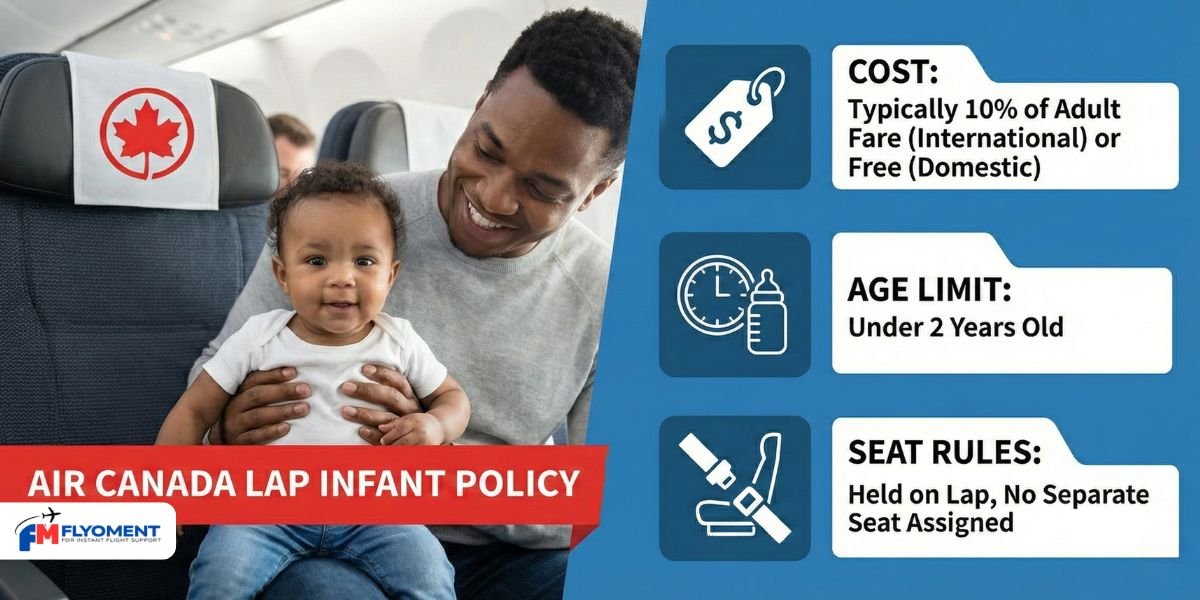
A lap infant is a child under two who sits on your lap, usually flying for free (domestic) or for a small fee (international). An infant with their own seat has a dedicated space and must be secured in an approved car seat. It’s a choice between the ultimate budget saver and the peace of mind of extra room and safety.
- The Cost Factor: Lap infants typically fly for $0 plus taxes within Canada/U.S., or 10% of the adult fare internationally. Booking a separate seat usually costs the full Child’s Fare (or adult fare on some routes), but it guarantees extra space for your gear.
- Safety Standards: Both the FAA and Transport Canada strongly recommend booking a seat and using an approved car seat. While lap-holding is legal, it offers no protection during unexpected turbulence or a rough landing.
- Baggage Perks: If you buy a seat for your infant, they get their own full baggage allowance. Lap infants are typically limited to one extra diaper bag and the gate-checking of a stroller and car seat.
- Signature Class (Pods): On many airlines, including Air Canada, car seats are not allowed in lie-flat pods. If you’re flying in premium cabins, your under-two traveler must be a lap infant for the duration of the flight.
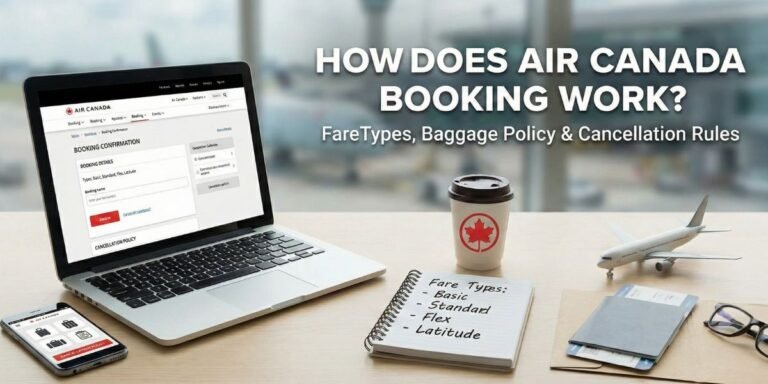
Read more: How Does Air Canada Booking Work? Fare Types, Baggage Policy & Cancellation Rules
How To Travel With More Than One Infant?
Traveling with more than one infant on Air Canada is a bit of a balancing act because of strict safety rules. Canadian law requires a one-to-one ratio: each baby under two must be accompanied by their own adult (16+). This means you can’t fly solo with two infants, even if you buy an extra seat. It’s all about ensuring every little one can be safely evacuated in an emergency.
Flying With Children Aged Two And Over
When your child hits age two, they officially trade your lap for their own seat, which feels like a major travel milestone (and a win for your personal space). On Air Canada, this means they’ll have their own full baggage allowance and a dedicated “Child’s Fare” on international routes. While car seats become optional at this age, keeping them in a familiar harness often makes for a much smoother, safer flight for everyone.
What Is The Kid Baggage Allowance On Air Canada?
When your child turns two and graduates to their own seat, they officially inherit the same baggage allowance as an adult. This is a huge relief for parents it means they get their own carry-on and personal item, plus whatever checked bag limit comes with your specific fare class. Even with this full allowance, Air Canada still lets you check a stroller and a car seat for free, ensuring you have all the gear needed for the next chapter of your family adventures.
2026 Kids Baggage Rules (Ages 2–11)
- The “Adult” Standard: Because they have a paid seat, your child gets the full baggage allowance of your ticket. For example, if you’re in Economy Flex, they get one free checked bag (23kg/50lb) just like you.
- Carry-On Reality Check: As of 2026, Economy Basic fares within North America do not include a standard carry-on only a personal item. This applies to kids’ tickets too, so ensure their favorite toys fit in a backpack that goes under the seat.
- Free Equipment Bonus: On top of their regular luggage, you can still check two pieces of baby equipment (e.g., a stroller and a car seat/booster) for free. You can choose to check these at the counter or at the boarding gate.
- Car Seats on Board: If you’ve brought an FAA or CMVSS-approved car seat, your child can use it in their own seat (except in Signature Class pods). This doesn’t count against your carry-on limit; it’s considered an essential safety device.
What Is Air Canada Car Seat Policy?
Air Canada car seat policy focuses on specific safety certifications and cabin compatibility. Any seat used on board must be a hard-backed device with a five-point harness and bear the National Safety Mark for Canada or the red FAA “certified for aircraft” label for U.S. models. While rear-facing seats are permitted for infants under 20 lbs (9 kg), they must be installed in window seats to keep aisles clear. Note that car seats and the CARES harness are strictly prohibited in Signature Class pods due to integrated airbag seatbelts, but you can always check them at the gate for free.
Read more: Can Babies Fly Free on Frontier Airlines? Infant Policy, Baggage & Seat Rules
What Are The Exemptions To Use A Child Restraint Device?
While Air Canada is big on safety, there are specific scenarios where using a child restraint device (CRD) is either restricted or simply not an option. The most significant “no-go” zone is the Signature Class cabin the fancy lie-flat pods where the high-tech seatbelts actually have built-in airbags that are incompatible with car seats. Additionally, if you haven’t purchased a separate seat for your under-two traveler, they must be securely held in your lap during critical times, as you can’t use a restraint device on a seat that isn’t officially yours.
Key CRD Exemptions & Restrictions
- Signature Class (Pods): Car seats and CARES harnesses are strictly prohibited in these pods because the airbag-equipped seatbelts cannot safely secure the device.
- Lap Infants: If your child is flying as a “lap infant” (unpaid seat), you cannot use a car seat during the flight, even if there is an empty seat nearby, unless you officially upgrade their ticket.
- Booster Seats: Any seat that requires a shoulder belt to function (standard boosters) is exempt from use on board because aircraft only provide lap belts.
- Aisle and Exit Rows: For evacuation safety, CRDs are generally prohibited in exit rows and aisle seats; they must be installed in a window seat to avoid blocking other passengers.
- Certain Aircraft Types: On some smaller regional planes (like the Dash 8), certain wide car seats or the CARES harness may not fit or be compatible with the seat frame.
What Is The Size/Weight Limit For Air Canada Bassinets/Carrycots?
Air Canada bassinets are a godsend for long-haul flights, but they come with a strict “small and stationary” rule. To use one, your baby must weigh less than 12 kg (25 lbs) and, crucially, be unable to sit upright on their own. Once a baby can sit up, the bassinet becomes a safety risk. These little cradles are roughly 32 inches long by 14 inches wide, meaning they’re perfect for newborns and younger infants but can get a bit snug as your baby approaches that first birthday. Since they are only available in specific bulkhead rows, it’s always a race to snag one so calling Air Canada to reserve yours the moment you book is the best way to ensure your arms get a much-needed break over the Atlantic.
What Is Air Canada Pushchair/Stroller Policy?
Air Canada stroller policy is designed to be parent-friendly, allowing you to bring one stroller for every child you’re traveling with, completely free of charge. Most parents opt for “gate-checking,” which lets you keep your stroller right up until you step onto the plane and have it waiting for you at the aircraft door when you land. If you have a small, “umbrella-style” stroller that folds down to a diameter of 25.5 cm (10 in) and a length of 92 cm (36 in), it’s a breeze. However, if you’re bringing a “monster” jogger or a large, multi-piece travel system, you’ll need to check it at the main baggage counter, as these larger models simply won’t fit through the jet bridge or into the hold at the last minute.
Read more: What Is United Airlines Infant Policy? | Lap Child Fees, Rules & Age Limit
What Is Air Canada Bassinet Policy?
Air Canada bassinet policy is a total lifesaver for parents on long-haul flights, but it comes with a strict “small and stationary” rule. To use one, your baby must weigh less than 12 kg (25 lbs) and, crucially, be unable to sit upright on their own. Since these little cradles are only available in specific bulkhead rows, it’s always a race to snag one calling the airline to request yours as soon as you book is the only way to ensure your arms get a much-needed break over the Atlantic.
2026 Bassinet & Bulkhead Tips
- The Weight Ceiling: The limit is strictly 12 kg (25 lbs). If your baby hits a growth spurt right before the flight, the crew may have to deny the bassinet for safety reasons.
- Signature Class Restriction: For safety reasons, bassinets (and car seats) are generally not permitted in Signature Class pods due to the airbag-equipped seatbelts.
- Flight Compatibility: Bassinets are mostly available on international wide-body aircraft (Boeing 777, 787, and Airbus A330). Most smaller regional planes used for domestic hops won’t have them.
Conclusion
Wrapping it all up, flying with little ones on Air Canada really comes down to prep and knowing the quirks of the “7-day rule” or those specific bassinet weight limits. Whether you’re braving the lap-infant hustle to save some cash or springing for a separate seat to get that extra breathing room, the goal is always the same: a smooth, safe ride. It’s definitely a logistical puzzle juggling strollers, car seats, and diaper bags but once you’re settled into that bulkhead row or watching your toddler claim their own window seat, the destination finally feels within reach.
FAQ
Q.1 What Are The Rules For Infants On Air Canada?
Ans: An infant as young as 7 days can travel on an Air Canada flight. At no time can an adult passenger (16 years of age or older) be responsible for more than one infant.
Q.2 What Documentation Does An Infant Need To Fly Within Canada?
Ans: Proof of age required (a photocopy of birth certificate, health card or passport is acceptable). Due to safety regulations, without proof of age, you may be required to purchase a seat for your lap-infant.
Q.3 Can I Bring A Diaper Bag On Air Canada?
Ans: If you’re travelling with children and are bringing a diaper bag or collapsible stroller, any special rules and exemptions still apply: You can continue to bring an additional bag, such as a diaper bag.
Q.4 Is A Stroller Allowed On A Flight?
Ans: Baby strollers, buggies, or prams may be checked in free of charge, provided they are being used by the infant or child who is travelling.