
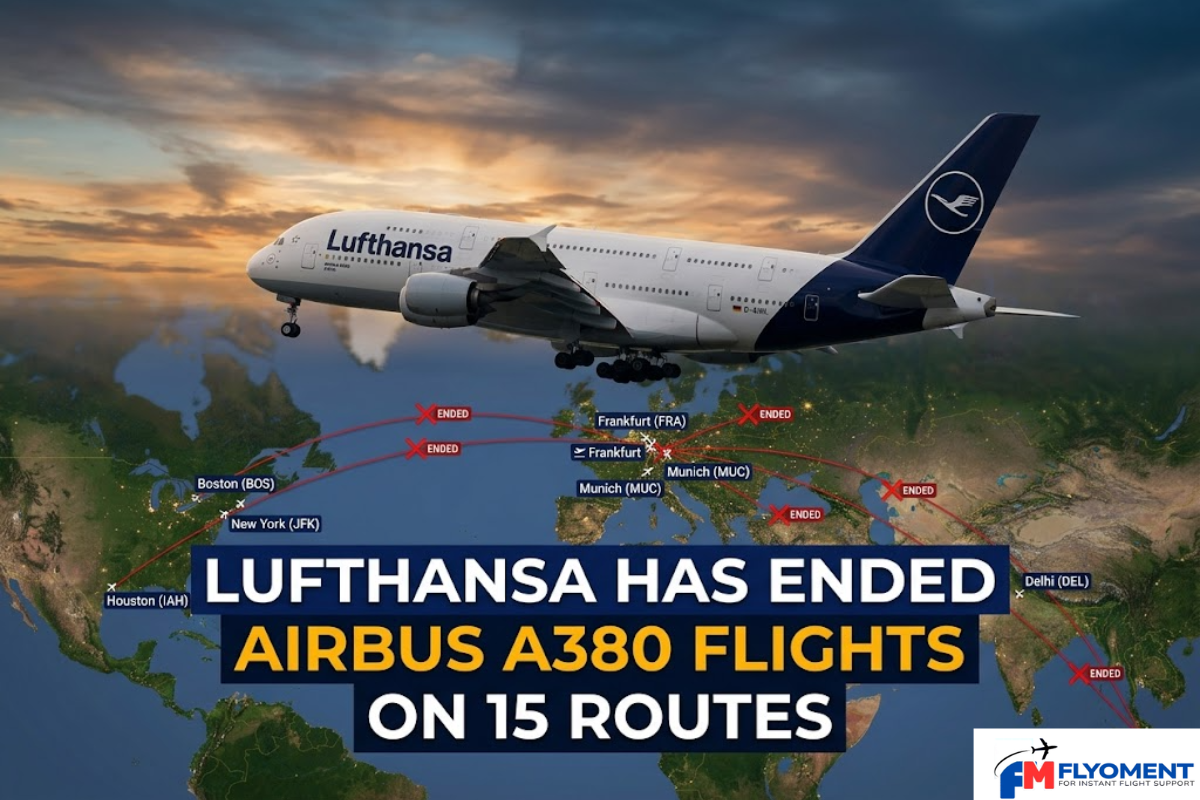
Major Network Shift for Flagship Aircraft
Lufthansa’s decision to cease operations of the Airbus A380 from 15 of its routes is part of a major change to the way the airline operates its long-haul network. This adjustment represents a significant effort on the part of the airline to reconfigure capacity and respond to changing demand trends within the travel industry; they are also looking to improve efficiency.
Focus on Operational Efficiency
The Airbus A380 has now been removed from many routes by Lufthansa in order to improve operational efficiency and reduce the costs of flying large aircraft.
Need Instant Support from Lufthansa?
Call +1-(855)-510-7629 NowThe advantages of this strategy are:
- Reduction of fuel consumption with small aircraft
- Increased route profitability
- Flexibility with on-demand passengers
The strategy reflects a more general trend towards more flexible and efficient fleet capacity.
Transition to Smaller Widebody Aircraft
The replacement aircraft for the previously operated Airbus A380 are smaller widebody jets like the Airbus A350 or Boeing 787 Dreamliner.
- Fuel-efficient
- Cost-effective
- Flexibility with on-demand passengers
This allows the airline to continue its services with increased sustainability.
Impact on Passengers
Some customers on compromised routes can expect a different aircraft and an altered cabin feel. The A380 is known for having a lot of space in each row, whereas the replacement aircraft do have modern amenities and seating that is still comfortable.
Potential options for passengers that may be impacted:
- Reduced seat availability
- Changes in seat configuration and placement
- Some minor differences in the on-board experience.
The airline has a commitment to providing excellent customer service and has the same standard of service delivery for all of its fleet.
Responding to Changing Travel Demand
Due to decreases in demand on specific routes, we noticed an equal drop in the amount of booked passengers. In order to provide a more precise balance of supply and demand, we reduce the number of large aircraft (Airbus A380 etc.) deployed on these routes to best meet our business needs.
Lufthansa responds to the following:
- Lower passenger demand
- Rising competition
- Changing travel behaviour
Environmental and Sustainability Considerations
Using newer, more fuel-efficient aircraft contributes to the airline’s sustainability program. Modern aircraft like the Airbus A350 and Boeing 787 Dreamliner produce fewer CO₂ emissions compared to older, larger aircraft.
Advantages include:
- Reduced emissions
- Improved fuel efficiency
- Contribution to sustainability
Industry-Wide Implications
The decision of withdrawing the A380 from a number of its routes and operating bases corresponds with airline trends throughout the world, as airlines commence to utilize smaller yet longer-range aircraft because of their flexibility and efficiency. By continuing to refine their fleets, airlines are likely to see a diminished role for ultra-large aircraft and more clearly defined routes for premium products.
Future of the A380 in Lufthansa’s Fleet
Although the A380 is being retired from numerous Lufthansa routes, it has not been retired completely. The airline will likely continue to use the aircraft on routes that can sustain the necessary level of demand for the aircraft. Overall, this strategy will allow Lufthansa to achieve a balance between the level of efficiency achieved from using the A380 and providing a premium travel experience.