Flying with your pet doesn’t have to be complicated if you know the rules in advance. Alaska Airlines is one of the most pet-friendly U.S. carriers, offering flexible options for dogs traveling in the cabin, as checked baggage, or via cargo. This guide explains everything you need to know before booking.
What Is Alaska Airlines Dog Policy?
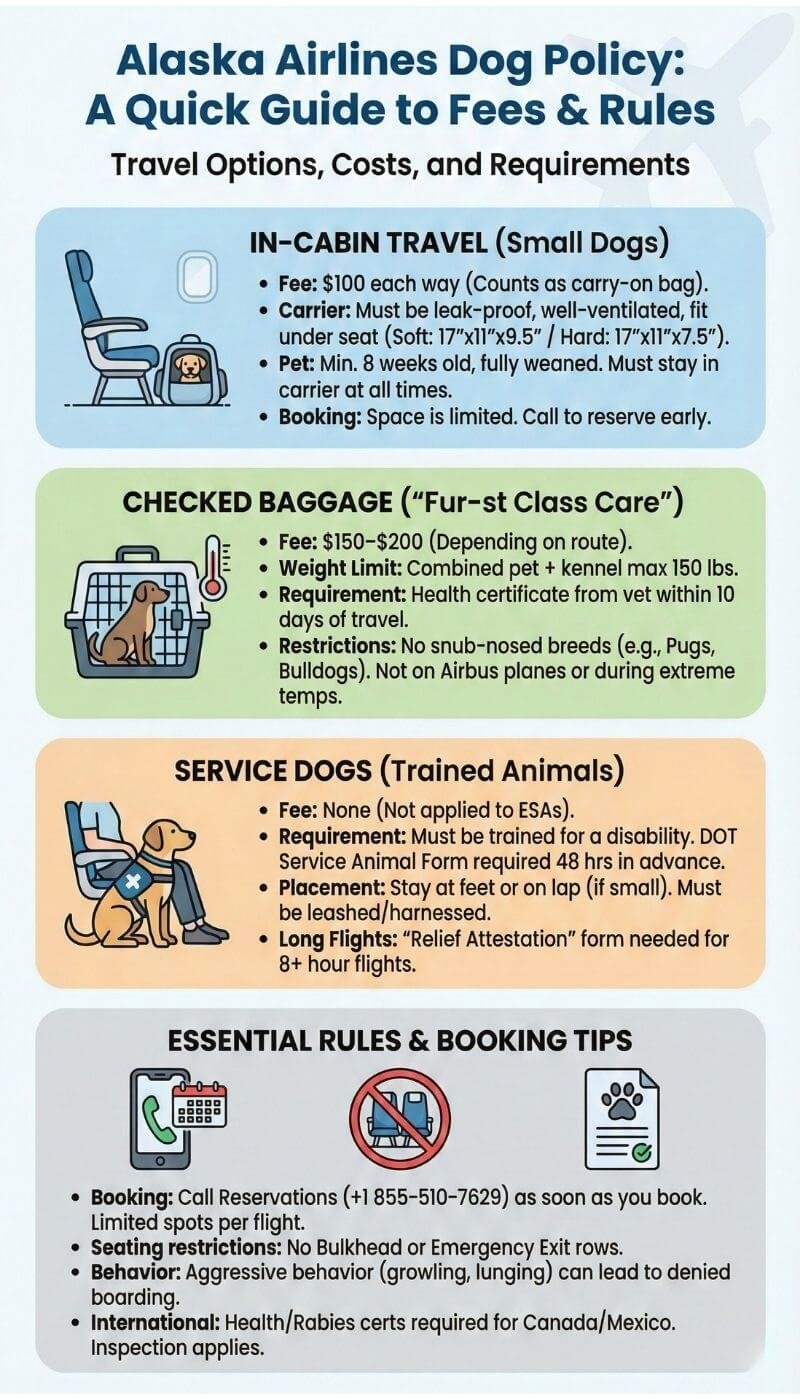
Alaska Airlines is quite pet-friendly, allowing small dogs in the cabin for a $100 fee each way. Your dog must stay inside a leak-proof carrier that fits under the seat, and they count as your carry-on bag. For larger pups, you can use their “Fur-st Class Care” checked baggage service for $150 to $200, depending on your route. Just keep in mind that “brachycephalic” or short-nosed breeds (like Pugs or Bulldogs) are restricted from the cargo hold for safety reasons, though they can still fly in the cabin if they fit.
- Cabin Rules: Dogs must be at least 8 weeks old and fully weaned.
- Reservation Needed: Space is limited, so you should call +1 (855) 510-7629 to add your dog to your booking as early as possible.
- Checked Baggage: The combined weight of your dog and their kennel cannot exceed 150 lbs.
- Health Docs: You’ll need a health certificate from a vet issued within 10 days of travel if your dog is flying in the cargo hold.
How Does Alaska Airlines Dog Policy Compare?
Alaska Airlines is widely considered the most pet-friendly carrier, especially compared to the “Big Three. While Delta and United have mostly moved toward cargo-only for big pets—which can cost upwards of $400—Alaska keeps it accessible. They also have a more generous policy on species, allowing rabbits and birds in the cabin, whereas many others have restricted travel to just cats and dogs.
What Are The Pet Travel Options On Alaska Airlines?
Alaska Airlines is a favorite for pet owners because they actually offer multiple ways to travel, rather than just forcing everyone into the cabin. Their “Fur-st Class Care” program covers everything from small dogs sitting at your feet to larger animals traveling in a climate-controlled cargo hold. It’s one of the few major airlines that still treats pet travel as a standard service rather than a rare exception.
- In-Cabin ($100): Small dogs and cats can fly with you if their carrier fits under the seat. They count as your carry-on bag, and the fee is one of the lowest in the industry.
- Checked Baggage ($150): If your pet is too big for the cabin, they can travel in a temperature-controlled compartment on the same flight as you. You’ll just need a health certificate from your vet.
- Pet Connect Cargo: For very large pets (over 150 lbs including the crate) or those traveling solo, Alaska’s dedicated cargo service provides specialized handling from airport to airport.
- Species Variety: Unlike many competitors that only allow cats and dogs, Alaska often accepts rabbits and household birds in the cabin (though international rules vary).
- Breed Safety: For the safety of the animal, “snub-nosed” breeds like Pugs or Bulldogs aren’t allowed in the cargo hold due to breathing risks, but they are welcome in the cabin.
Read more: How To Check Alaska Airlines Flight Status
How To Book Your Dog On Alaska Airlines?
To book your dog on Alaska Airlines, the most important thing to remember is that space is limited, so you can’t just show up at the airport and hope for the best. You’ll want to secure your pet’s spot as soon as you buy your own ticket. While you can sometimes use the online chat, the most reliable way is still a quick phone call to their reservations line.
- Call Early: Dial +1 (855) 510-7629 to add your dog to your reservation. They only allow a few pets per flight, so booking at least 48 hours in advance is essential.
- Choose Your Method: Decide if they are flying in-cabin ($100) or as checked baggage ($150–$200). Note that “checked” pets aren’t allowed on Airbus planes or during certain winter/summer temperature extremes.
- Prep the Paperwork: If your dog is going in the cargo hold, you must have a health certificate from your vet issued within 10 days of travel. In-cabin pets generally don’t need this for domestic flights.
- Check-In Requirements: Arrive at least two hours early. You’ll pay the pet fee at the ticket counter, where an agent will inspect your carrier to ensure it’s leak-proof, ventilated, and properly sized.
- Cargo Alternative: For very large dogs (over 150 lbs with their crate), you’ll need to book through Alaska Air Cargo (+1 (855) 510-7629) instead of standard reservations.
What Is Alaska Airlines Dog Policy: In-Cabin Requirements?
Traveling with your dog on Alaska Airlines is pretty straightforward as long as you plan ahead. They treat your pup as your carry-on item, so you’ll need to swap your roller bag for the pet carrier. The biggest thing to remember is that your dog has to stay inside the carrier—head and tail included—from the moment you board until you leave the airport. It’s all about making sure they are comfortable enough to stand up and turn around while tucked under the seat.
Read more: How To Upgrade to a First Class Seat on Alaska Airlines?
Quick Requirements:
- The Cost: It is $100 each way.
- Carrier Size: Hard-sided: Max 17″ x 11″ x 7.5″
- Soft-sided: Max 17″ x 11″ x 9.5″ (recommended for a better fit).
- Age Limit: Your dog must be at least 8 weeks old and fully weaned.
- Booking: Space is limited (usually only 8 pets per flight), so call them to reserve your spot as soon as you book.
- Seating: You can’t sit in the bulkhead or emergency exit rows with a pet.
What Are The Restrictions For Flying With Dogs On Alaska Airlines?
Flying your dog on Alaska Airlines isn’t too difficult, but there are some strict rules to keep everyone safe. You have to be at least 18 to bring a pet, and your dog must be at least 8 weeks old. The biggest thing is space: only a certain number of pets are allowed per flight, so you can’t just show up. You need to call and reserve a spot early. Also, your dog’s carrier counts as your carry-on bag.
- Seating Limits: You cannot sit in the bulkhead or emergency exit rows if you have a dog under your seat.
- Carrier Stay: Keep your pup fully inside their carrier and zipped up at all times, from the gate until you finally land.
- Behavior: If your dog acts out by growling, barking, or lunging at the gate, Alaska Airlines can legally block you from boarding to keep other passengers safe and the cabin calm.
- Flight Types: When flying to Canada or Mexico, you’ll need a valid rabies certificate and a health certificate from your vet. Mexico also requires a quick, fee-free inspection by animal health officials upon arrival.
What Is The Alaska Airlines Service Dog Policy?
To get started, you’ll need to fill out the DOT Service Animal Air Transportation Form at least 48 hours before you take off. This form basically asks you to promise that your dog is healthy, vaccinated, and properly trained to handle the stress of a busy airport and a crowded plane. If you book a last-minute flight, just make sure to bring a printed copy of the form directly to the gate.
Once you’re on the plane, your dog needs to stay on the floor right at your feet or in your lap if they’re small enough. They aren’t allowed to sit in a passenger seat, use the tray table, or hang out in the aisle where they might trip someone. It’s also important that they are leashed or harnessed the whole time. If your flight is a long one—over eight hours—you’ll also need to submit a “Relief Attestation” form to confirm your dog won’t have any accidents.
Read more: Does Alaska Airlines Have Student Discounts?
FAQ
Q.1 How Strict Is Alaska Airlines Pet Policy?
Ans: Alaska Airlines pet policy is generally considered strict but clear.
Q.2 Do I Need A Health Certificate To Fly With My Dog On Alaska Airlines?
Ans: Alaska Airlines does not require a health certificate for pets traveling in the cabin.
Q.3 What Vaccines Do Dogs Need To Fly Alaska Airlines?
Ans: The Alaska state regulations require a valid CVI and a current rabies vaccination for all dogs, cats, and ferrets entering Alaska.
Q.4 What Airline Has The Most Lenient Pet Policy?
Ans: Alaska Airlines offers one of the more pet-friendly policies among major carriers, though it does come with some limitations you should be aware of.