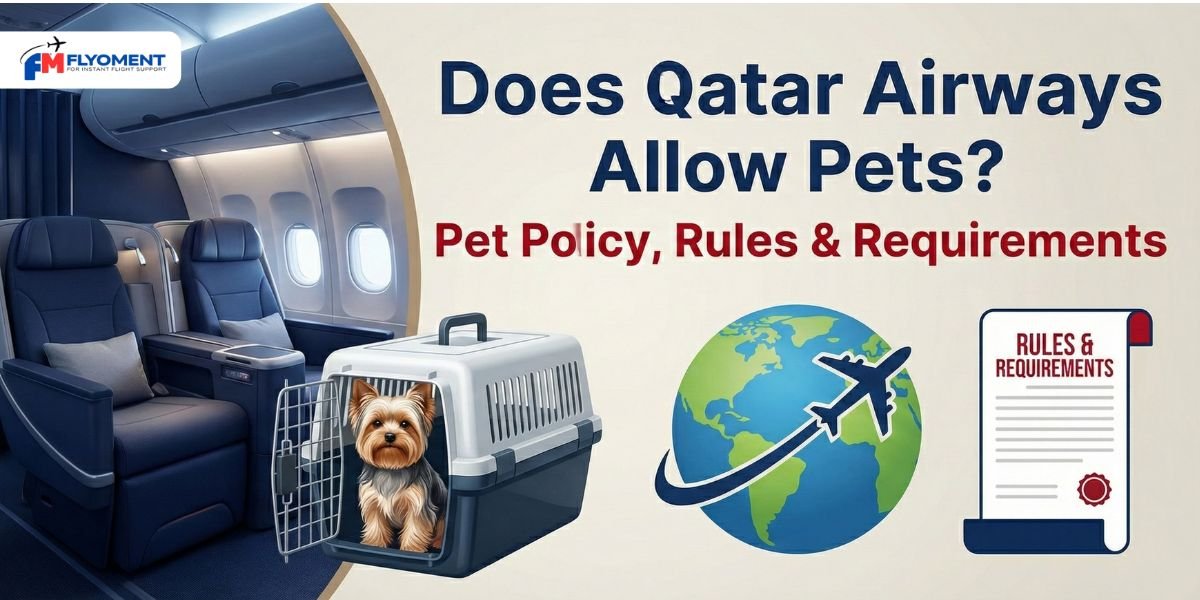
When you fly with Qatar Airways, the pet policy is a bit more formal and specific than your average carrier, reflecting their high-end service. Unlike domestic airlines that let small dogs lounge under your seat, Qatar generally requires cats and dogs to travel in the temperature-controlled hold as checked baggage. The only real “human” exception is for falcons which have a legendary status in Middle Eastern culture and can actually sit in the cabin with you. It feels less like a casual trip and more like a logistics mission, but the upside is their world-class animal facility in Doha, where pets get a “pit stop” during long layovers to stretch and freshen up.
What Is Qatar Airways Pet Policy For International Flights?
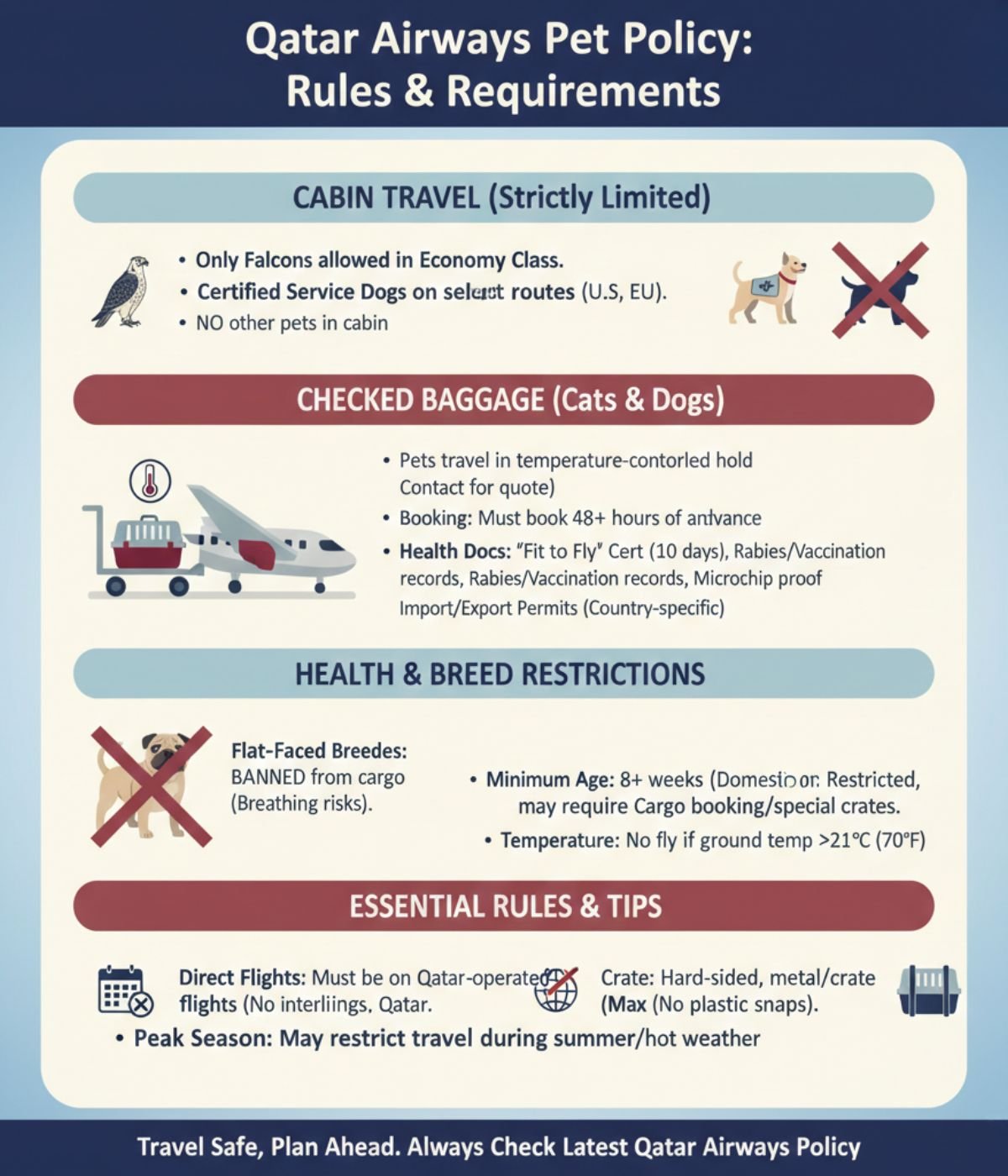
The only real exceptions to this cabin rule are falcons (which are famously allowed in Economy) and certified service dogs on specific routes like those to the U.S. or Europe. Qatar is known for having some of the highest standards for animal welfare, providing professional care and even walking dogs during long layovers in Doha. However, their rules are strict you must book at least 48 hours in advance and provide a “fit-to-fly” certificate.
What Are The Documentation Requirements?
When you’re flying your pet internationally with Qatar Airways, the paperwork is essentially their ticket to board. Because your pet will be traveling in the cargo hold, the airline is incredibly strict about health and identity verification to ensure every animal is safe for the long haul. You’ll need to coordinate closely with your vet to time everything perfectly, as most documents have a very short “shelf life” before they expire for travel purposes.
- “Fit to Fly” Certificate: You’ll need a vet-signed health check proving your pet is fit, issued no more than ten days before you fly.
- Pet Passport/Vaccination Record: Keep their vaccination records handy, making sure everything is current especially that all-important, up-to-date rabies shot for the journey.
- Microchip Proof: Ensure your pet has a 15-digit ISO microchip. The number must match every document exactly to avoid travel delays.
- Import/Export Permits: Check your destination’s rules early; countries like Qatar or those in the EU often require government-approved import permits before arrival.
- Breed Verification: It’s smart to have a vet letter confirming your dog isn’t a restricted “snub-nosed” breed to avoid any confusion at check-in.
Read more: What Are The Rules For Infants On Qatar Airways?
What Is Health, Breed Or Age Restrictions In Qatar Airways?
Qatar Airways has some of the most specific safety standards in the world when it comes to who can fly. They are very protective of animals, which means they won’t hesitate to decline a pet if they feel the flight could be physically dangerous for them. These rules aren’t meant to be a hassle; they are based on how different breeds and ages react to the unique environment of an airplane.
- Flat-Faced Breeds: Flat-faced breeds like Pugs or Persians can’t fly because their short airways make breathing difficult under stress, posing a high risk of heatstroke in the cargo hold.
- Strong-Jawed Breeds: Certain powerful breeds, like Pit Bulls or Staffies, are often restricted from the regular hold and must be booked through the specialized Cargo department in extra-secure crates.
- Minimum Age: However, if you are entering the U.S. or Qatar, that age limit often jumps to 6 or 7 months due to local rabies laws.
- Health and Pregnancy: Pets that are more than 6 weeks pregnant or are currently nursing young will not be accepted without a very specific vet clearance.
- Temperature Sensitivity: If it’s hotter than 21°C (70°F) anywhere on your route, Qatar may refuse to fly “high-risk” breeds to ensure they don’t overheat during loading.
Read more: How to Upgrade Qatar Airways Seat?
What Are Additional Restrictions?
Aside from the main health and breed rules, Qatar Airways has a few extra “fine print” restrictions that focus on the physical logistics of the journey. One of the biggest factors is the aircraft itself; some smaller planes in their fleet simply don’t have the space or the specific ventilation systems required to carry live animals safely, so your flight choice might be restricted. They also have a very strict stance on “interlining,” meaning they generally won’t accept pets that are transferring from a different airline your entire trip needs to be on Qatar-operated flights. Finally, they keep a close eye on the calendar; during peak summer months or in exceptionally hot transit hubs, they may temporarily pause pet transport to prevent any risk of heat exhaustion during loading.
- Direct Flight Preference: Pets are typically only accepted on routes directly operated by Qatar Airways to ensure consistent care.
- Multi-Pet Limits: You can usually only put one adult pet per crate, though two small pets who are used to each other (under 14kg each) or three littermates under six months might be allowed to share.
- Crate Hardware: Skip the plastic clips; Qatar Airways usually requires metal nuts and bolts to secure the crate’s halves. This ensures the kennel won’t pop open during turbulence or heavy handling.
- Feeding Requirement: You’ll need to sign a document at check-in confirming you provided food and water within four hours of arrival at the airport.
Why Choose The AirPets?
Hiring AirPets is like getting a personal travel agent who views your pet as a family member rather than a piece of luggage. Let’s be honest, moving a pet across borders is a logistical nightmare filled with confusing laws, specific crate rules, and stacks of government paperwork that can easily derail your plans. AirPets eliminates that stress by handling everything from talking to vets and clearing customs to booking the most comfortable flight paths.
- Global Expertise: They have a worldwide network to handle imports and exports in almost any country.
- BOAS Specialists: They are pioneers in BOAS compliance, offering specialized safety protocols for flat-faced breeds like Pugs and Bulldogs.
- Prime Location: Their spot near Delhi’s airport and the Quarantine Office makes the final hand-off and check-in process totally seamless and fast.
- Climate-Controlled Transit: They use their own fleet of temperature-controlled vans for all ground transport, keeping your pet perfectly cool and comfortable from the moment they leave home until they reach the plane.
Read more: Can I Cancel My Qatar Flight and Get a Refund?
Conclusion
While it feels daunting to leave them in the hold, Qatar’s climate-controlled transit and dedicated animal care in Doha are world-class. The key is extreme preparation one wrong date on a health certificate or the wrong crate latch can halt your plans. Using a specialist like AirPets essentially buys you an insurance policy against these logistical headaches, ensuring your pet is treated as a VIP rather than just baggage.
FAQ
Q.1 Which Airlines Allow Pets In Cabins?
Ans: United, Delta, American, Alaska, JetBlue, Southwest, Spirit, Frontier, Air Canada, KLM, and Lufthansa.
Q.2 How Much Does A Dog Airline Ticket Cost?
Ans: Flying a dog costs roughly $100-$200 each way for small dogs in the cabin, while larger dogs flying as cargo can range from $300 to over $1,000.
Q.3 Is Qatar A Pet Friendly Country?
Ans: Pet etiquette: As Qatar is a Muslim country, dogs are not allowed in most public places.
Q.4 Does Qatar Air Allow Pets In The Cabin?
Ans: No animal other than a dog is permitted in the passenger cabin as a service animal or psychiatric service animal.