
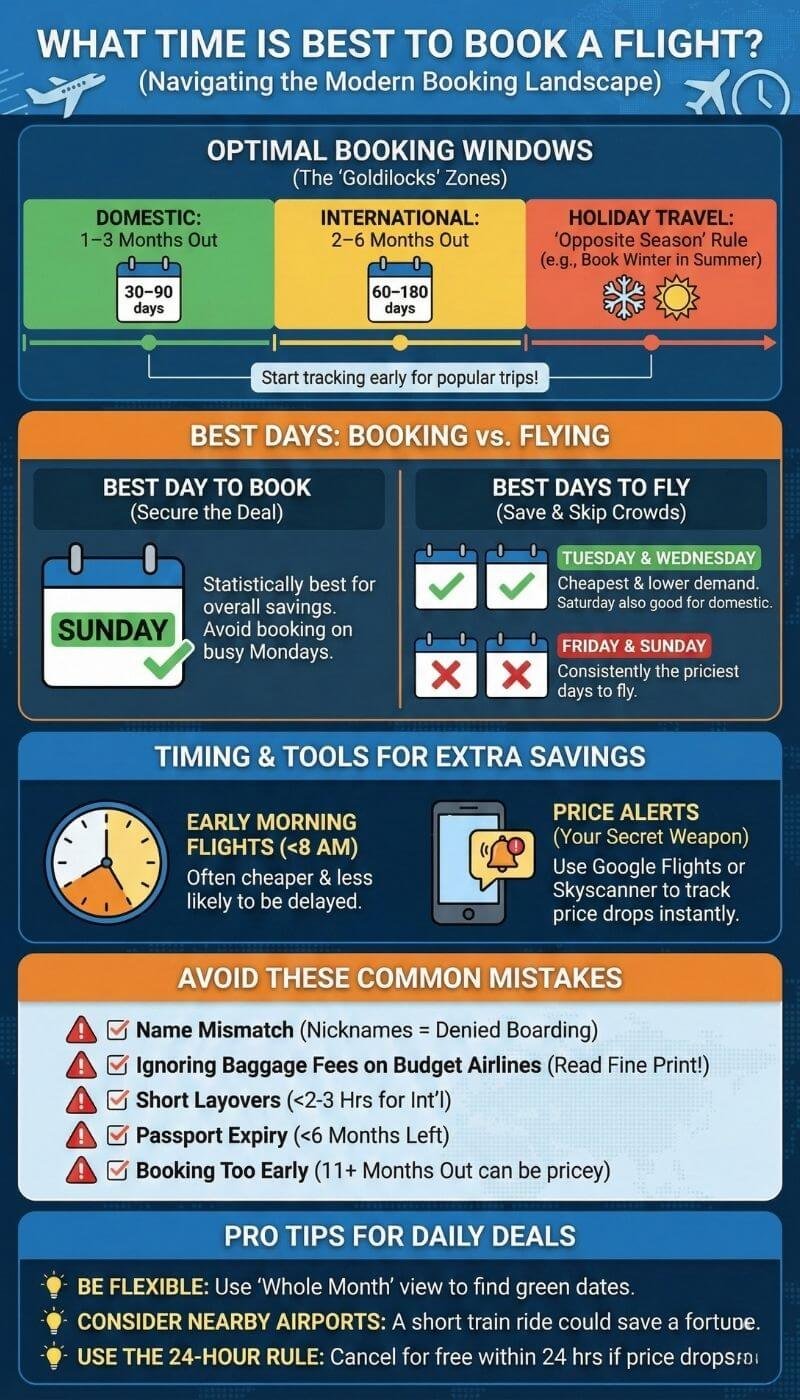
Finding the “perfect” time to book a flight is more about the travel day than the booking day. While people used to swear by the “Tuesday at midnight” rule, modern algorithms have made that mostly a myth. Now, the best way to save is by booking your domestic flights 1–3 months out and international trips 2–6 months ahead. If you’re eyeing a popular summer trip or a holiday getaway, you should start tracking even earlier. Generally, flying on a Tuesday, Wednesday, or Saturday will save you the most money because demand is lower midweek. It’s also smart to check prices in the evening around 8:00 PM to 11:00 PM as airlines often tweak fares after the business day. Ultimately, setting up a price alert on Google Flights or Skyscanner is your best bet; it takes the guesswork out and pings you the second a price drop happens.
Why Timing Matters When Booking Flights?
Timing is everything when booking because airline prices are basically a giant game of supply and demand. Airlines use complex algorithms that hike up fares as seats fill up or as the departure date gets closer and travelers get more desperate. If you book too early, you might miss out on a promotional sale, but if you wait too long, you’ll get hit with those “last-minute” premium prices. By hitting that sweet spot, usually a few months out you’re catching the airline when they’re most competitive, ensuring you don’t overpay for the exact same seat as the person next to you.
What Are the Best Days of the Week to Book Flights?
Finding the best day to book a flight is honestly a bit of a moving target. While the old “Tuesday at midnight” rule is mostly a myth now due to modern algorithms, Sunday has actually emerged as a statistically solid day to hit the “buy” button. Data shows you can save around 5% to 15% just by booking on the weekend instead of a busy Monday.
However, the real secret isn’t when you buy it’s when you fly. Shifting your departure to a Tuesday or Wednesday almost always slashes the price because you aren’t competing with the weekend rush. If you’re looking at 2026 travel, aim to book domestic trips about a month out and international ones at least three months early. Flexibility is your best friend.
Quick Booking & Flying Guide
- Best Day to Buy: Sunday is currently the statistical winner for securing the lowest prices across most airlines.
- Cheapest Days to Fly: Fly mid-week for international deals, but stick to Saturdays for domestic hops. It’s the easiest way to save 20% fast.
- Avoid the “Monday/Friday” Trap: Mondays and Fridays are pricey. Business travelers and long-weekend crowds spike demand, so expect to pay a premium those days.
- The “3 PM Tuesday” Myth: Forget the Tuesday afternoon myth. Algorithms change prices constantly now, so grabbing a flight on Sunday evening usually works better.
- Time of Day: If you can stomach it, early morning flights (before 7:00 AM) are usually cheaper and less likely to be delayed.
What Is the Best Day to Book a Flight?
Trying to snag a cheap flight in 2026 feels like a constant battle against sneaky airline algorithms. The classic Tuesday midnight trick is pretty much ancient history now; these days, your best bet is actually booking on a Sunday. It’s surprisingly effective, sometimes knocking 15% off those pricey international tickets. But honestly, the real win is in your travel dates. If you can swing a Tuesday or Wednesday departure, you’ll dodge the massive price hikes caused by the Monday business rush and the Friday getaway crowd. It’s all about staying one step ahead of the tech and being flexible enough to fly when everyone else is stuck at the office. A little strategy goes a long way for your wallet.
- Best Day to Book: Sunday is the best day to book for overall savings. For the lowest flight costs, fly Tuesday or Wednesday.
- Best Days to Fly: Tuesday, Wednesday, and Saturday are the “budget heroes.” Avoid Fridays and Sundays, which are consistently the priciest.
- Domestic Window: The “Goldilocks” zone for domestic flights is 1 to 3 months before you leave (roughly 40 days is the sweet spot).
- Time of Day: Early morning flights (departing before 8:00 AM) are usually cheaper and less likely to be delayed than afternoon slots.
What Is the Best Day to Fly?
In 2026, the best days to fly are consistently Tuesday and Wednesday. Since most people prefer to travel around the weekend for short breaks or Monday for business, midweek flights see much lower demand, leading to cheaper fares. You can often save around 13% to 20% simply by shifting your departure. Saturdays can also be surprisingly affordable for domestic trips, as business travel drops off, while Sundays and Fridays remain the most expensive days to be in the air.
When to Book Holiday Flights in 2026?
To snag the best deals for the 2026 holiday season, you really need to plan in the “opposite season.” For major holidays like Christmas or New Year’s, the cheapest seats are usually snapped up by those booking in the summer, specifically around July or August. If you’re traveling domestically, aim to lock in your tickets at least 3 to 5 months out, but for international trips, you should start monitoring and booking 6 to 10 months in advance. Waiting for a “Black Friday” sale is risky for peak dates because demand is so high that prices rarely drop; they mostly just climb.
2026 Holiday Booking Checklist
- The “Opposite Season” Rule: Book your winter holiday flights in July/August and your summer 2026 trips by January/February.
- Thanksgiving Strategy: Aim to book by early October at the latest. Flying on Thanksgiving Day itself is often significantly cheaper.
- Christmas & New Year’s Window: The “Goldilocks” zone for international travel is right now (January) through May. For domestic, don’t wait past September.
- Fly Midweek: Even during the holidays, flying on a Tuesday or Wednesday can save you hundreds compared to the weekend rush.
- Be the Early Bird: Take the first flight of the morning. Not only are they often cheaper, but they are also much less likely to be delayed by the holiday travel chaos.
How Far in Advance Should You Book a Flight?
For domestic flights, the “Goldilocks window” is usually 1 to 3 months before you plan to leave. If you’re heading overseas, you’ll want to start looking much earlier, ideally 2 to 6 months out. While it’s tempting to book the second the schedule opens, airlines often set high baseline prices a year in advance and only start dropping them once they see how the seats are actually selling.
What Are the Common Mistakes to Avoid When Booking Flights?
One of the biggest mistakes you can make is moving too fast and ignoring the fine print. You think you scored a bargain, but then you realize that “basic” fare doesn’t even include a carry-on, or worse, you find a typo in your own name. Airlines love charging massive fees for those tiny fixes. It’s honestly worth taking a breath and double-checking everything before you commit. Slowing down for two minutes to verify your details and baggage allowance can save you a massive headache and a lot of cash once you actually get to the airport. It’s always better to be safe than broke.
- The “Name Match” Fail: Using a nickname like “Mike” instead of “Michael” can actually get you denied at boarding.
- Ignoring Baggage Fees: That “steal” of a deal on a budget airline often becomes the most expensive option once you add a carry-on or checked bag.
- Short Layovers: Booking a 45-minute connection in a massive airport like Dubai or London is a recipe for a missed flight. Aim for at least 2–3 hours for international transfers.
- Passport Expiry: Many countries won’t let you in if your passport expires within six months. Check your dates before you book, not the week you leave.
- Booking Too Early: It sounds counterintuitive, but booking 11 months out is often just as expensive as booking last minute. Wait for the “Goldilocks window” of 3–6 months for international travel.
Read More: Can You Change the Name on a Flight Ticket?
What Are the Tips to Find Cheap Flights Any Day of the Week?
To find cheap flights on any day of the week, you have to stop thinking about a “magic booking day” and start using the system’s own tools against it. The biggest secret in 2026 is flexibility; if you aren’t tied to a specific date, you can almost always find a bargain. Use the Google Flights Explore map or Skyscanner’s “Everywhere” feature to see where the cheapest seats are flying from your home airport. Setting up Price Alerts is also a total game-changer because it does the work for you, pinging your phone the second a fare drops. Most importantly, don’t just look at the ticket price check for hidden baggage fees on budget carriers, as a “cheap” seat can quickly become pricey once you add a suitcase.
Pro Tips for Daily Savings
- The “Whole Month” View: Instead of picking specific dates, use the calendar view on Google Flights to see which days are green (cheapest). Moving your trip by just 24 hours can save you 20%.
- Book Midweek, Fly Midweek: While Sunday is statistically a great day to buy, Tuesday and Wednesday remain the cheapest days to actually be in the air.
- The 24-Hour Rule: In many countries, you can cancel any flight for a full refund within 24 hours. If the price drops the morning after you book, cancel and re-secure it at the lower rate.
- Airport Hops: Always look at nearby alternative airports. Catching a flight to a smaller hub and taking a quick train or bus can save you a fortune compared to flying direct.
- Incognito is a Myth: Stop worrying about incognito mode, it’s a myth. Airlines track general demand, not your cookies.
Conclusion
Mastering cheap flights is really about being proactive and ditching those outdated myths. It’s not just about chasing the lowest number on the screen; it’s about dodging those annoying traps like hidden baggage fees or layovers that are physically impossible to make. It’s all about staying proactive, setting up price alerts and keeping your eyes on the “Goldilocks” windows so you aren’t overpaying for the exact same seat as the person next to you. Don’t let yourself get tripped up by hidden baggage fees or unrealistic layovers just because a price looks low at first glance. If you stay flexible, double-check the fine print, and use the right tracking tools, travel becomes way less of a financial stress and more of an achievable adventure.
FAQ’s
Q.1 What Is The Cheapest Time To Book Flights?
Ans: The cheapest time to buy flights is usually 1-3 months before domestic trips and 2-8 months before international flights.
Q.2 What Time Of Day Is Best To Book Flights?
Ans: The best time to book flights isn’t a single magic hour; prices change constantly, but early mornings (5-9 AM) and late nights.
Q.3 When Not To Book Flights?
Ans: Peak travel periods, such as school holidays and major holidays like Christmas, Easter and Thanksgiving.
Q.4 Which Days Not To Book Flights?
Ans: Generally, Mondays and Fridays are more expensive than Tuesdays, Wednesdays and Thursdays.