
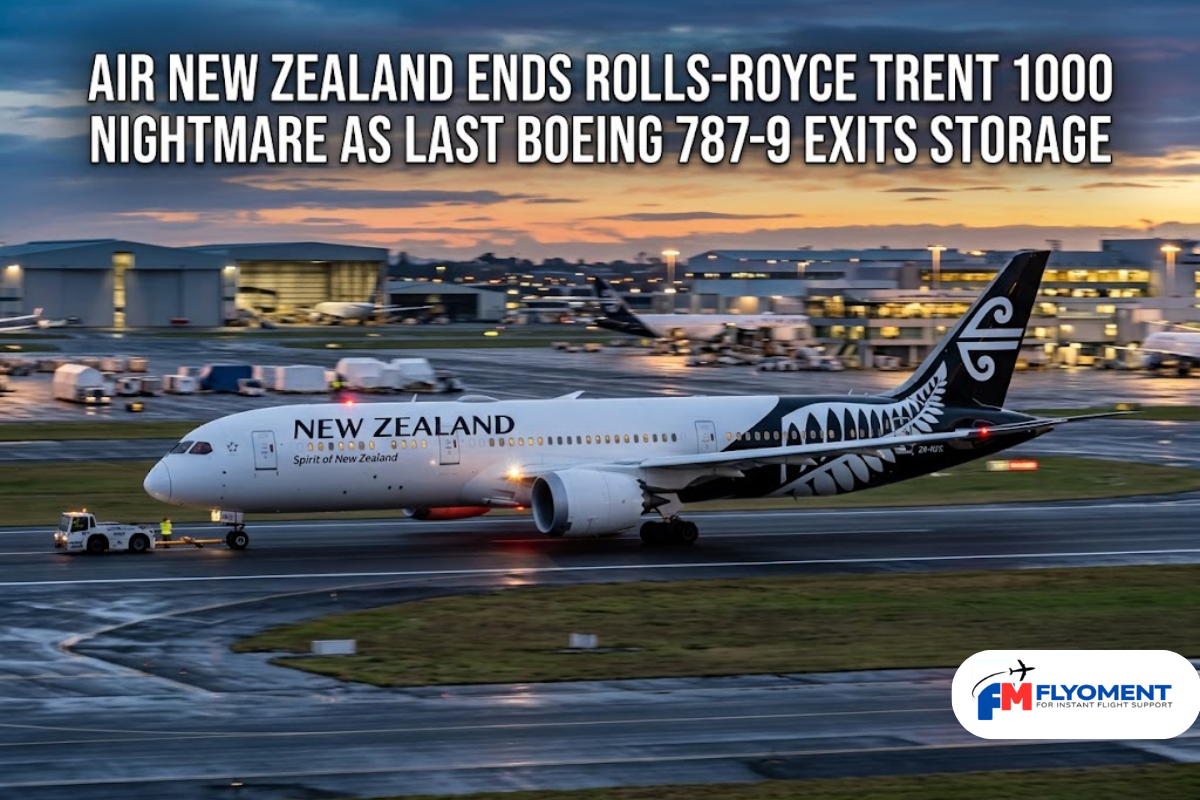
Air New Zealand Reaches an Important Milestone
Air New Zealand has long been in the throes of dealing with long-term storage of its fleet of planes due to faults with their Rolls-Royce Trent 1000 engines. The airline has now confirmed that its final Boeing 787-9 Dreamliner has been released from storage and is back to normal operations.
This is the end of the long and arduous period for the airline where it had grounded several of its aircraft due to engine maintenance problems. With the final aircraft back in service, Air New Zealand can now operate its entire Boeing 787-9 fleet again.
Need Instant Support from our support team?
Call +1-(855)-510-7629 NowA Long Journey Comes to an End
The Rolls-Royce Trent 1000 engine problem affected many airlines around the world. Air New Zealand was one of the airlines hit hardest, with many of its Dreamliners grounded while awaiting engine inspections and repairs.
The airline had to rework its schedules, reduce some flights, and modify its operations. Like other airlines, Air New Zealand also suffered from aircraft shortages during this period.
Now that the required maintenance has been carried out, the airline has brought its last Boeing 787-9 back on line.
More Aircraft Available for Passengers
Now that all Boeing 787-9 aircraft are flying, Air New Zealand has greater flexibility to operate on its international network.
Air New Zealand will be able to do the following:
- Increase flight availability
- Improve schedule reliability
- Reduce aircraft shortages
- Better meet passengers growing demand for travel
Travelers could expect a more reliable flight schedule in the months ahead.
Better Support for International Routes
Air New Zealand uses the Boeing 787-9 Dreamliner extensively in its long-haul operations. These aircraft operate on a number of international routes that connect New Zealand with destinations in Asia, North America, and Australia.
Having the entire fleet available gives the airline greater flexibility when it looks to plan future schedules and extend its airline’s services.
Years of Engine Challenges
The Trent 1000 engine problem has been one of the toughest technology hurdles the aviation industry has faced in the last decade.
Many airlines using these engines experienced the following:
- Aircraft groundings
- Engine inspections
- Repair delays
- Flight schedule changes
Because replacement engines were limited, some airlines had to wait months before aircraft could return to service. Air New Zealand worked closely with Rolls-Royce throughout this period to complete the required maintenance safely.
Positive News for the Airline
The return of the final Dreamliner is welcome news for both the airline and its passengers. A full fleet gives Air New Zealand a better handle on the busy periods of the year and improves operational efficiency. It also means the airline no longer needs to rush to substitute an aircraft at short notice. The airline says its focus remains on safe and reliable service across the network.
Looking Ahead
Now that the Rolls-Royce Trent 1000 mess is over, Air New Zealand can focus on growth and bettering the customer experience.
The reintroduction of the last Boeing 787-9 stored is a milestone for the airline after a difficult few years. The return of the final Dreamliner at a time of increasing international travel means the airline is better positioned to meet growing demand and continue to extend its international network.