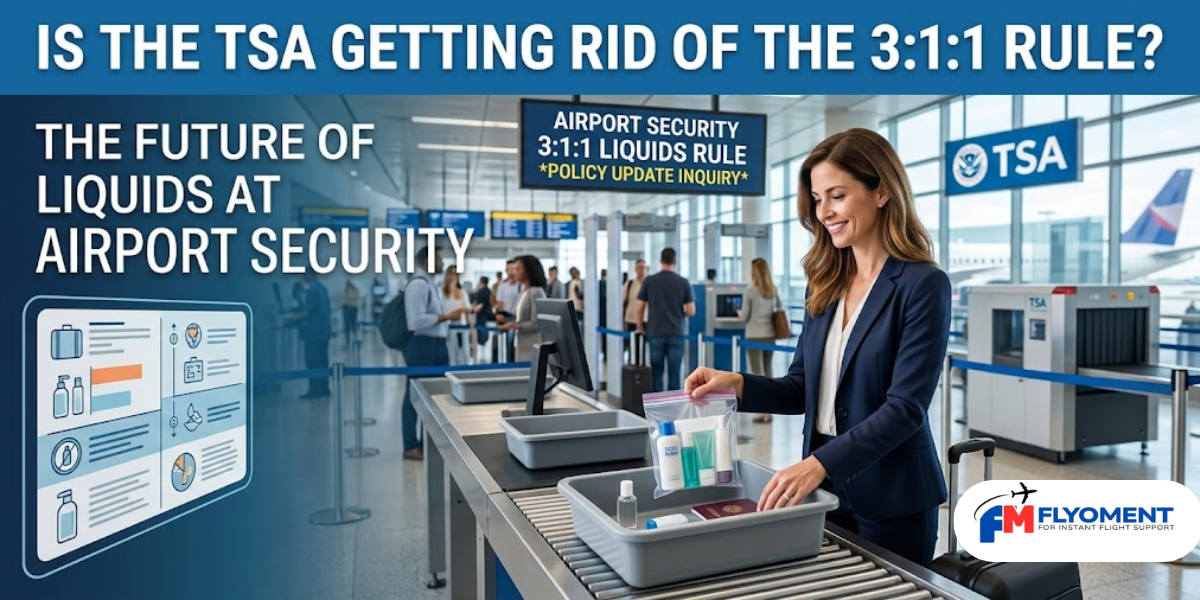
No. The Transportation Security Administration is still in effect with this TSA 3-1-1 rule at every American airport. People are getting confused because some big airports are using 3D scanners at security checks. These new machines are really great because you can leave your liquid bags in your luggage, and you do not have to take them out, which makes the lines move faster. The good news is that the Transportation Security Administration rule that liquids must be more than a hundred milliliters is still in effect. Good to know that the Transportation Security Administration continues to be strict about the liquid rule, which stipulates a maximum of one hundred milliliters.
What Is the TSA 3-1-1 Rule?
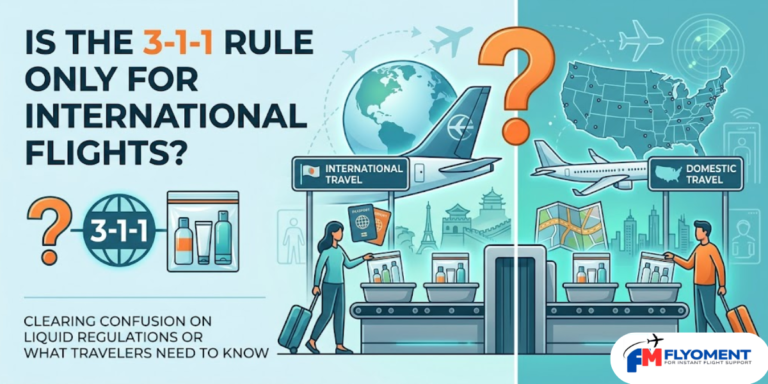
This rule is easy to remember so you do not get stuck at security. The key point of this rule is that it is so easy to remember that you won’t have a problem passing through security. The first number “3” refers to the size of the container of the liquid, gel, or paste, which should be equal to 3.4 ounces or 100 mL or less. The first “1” shows that all travel containers should be placed in a single plastic bag that is transparent and closes with a zipper or some other mechanism. The last “1” means that one person can take only a single plastic bag with liquids on the flight.
Need Instant Support from Travel Guide?
Call +1-(855)-510-7629 NowWhat Counts as a Liquid?
Trying to figure out what qualifies as a “liquid” at airport security can be outlandish because it includes all sorts of things. A helpful quick mnemonic to keep in mind is that if you can spill it, pour it, spray it, or spread it, it is treated as a liquid, so ordinary things such as your favorite peanut butter, thick hair gels, creamy make‑ups, and even toothpaste must be regulated to the same size constraints as a bottle of water.
- Gels and Pastes: Toothpaste, hair gel, and lip balm are liquids and must be in small travel containers.
- Spreadable Foods: Honey, peanut butter, and jam are liquids and will be removed if too big.
- Sprays and Aerosols: Body sprays, perfumes and roll-on deodorants must meet the small bottle requirements to get through the scanners
- Lotions and Cream: You are not allowed to bring face moisturizers, liquid cosmetics, and sunscreens in your carry-on bags. If they do not fit in your checked bags, you can put them there.
Why Was the 3-1-1 Rule Introduced?
The TSA 3-1-1 rule has a very specific purpose for its existence, and that purpose is related to a big security scare that happened in the summer of 2006. The 3-1-1 Rule serves a very specific purpose, a purpose that is tied up in an incident that took place during the summer of 2006. British Police discovered that a good deal of people were planning to smuggle liquid explosives into multiple flights in the form of drinks. They realized that someone could easily mix these ordinary-looking liquids together inside the cabin to cause a terrible disaster. To stop this threat immediately, airports worldwide banned all liquids at first, which caused massive chaos. Eventually, security experts did some testing and realized that keeping liquid bottles under one hundred milliliters makes it impossible to carry enough material to build anything dangerous. That is why they created this simple rule, making sure everyone can still travel with their basic toiletries while keeping flights completely safe.
Does Every Airport Have New Technology?
No, definitely not every airport has this new technology yet. While some big, busy airports in places like the UK and the US have started installing these fancy new 3D scanners, the vast majority of airports around the world are still using older machines. Buying and setting up these high-tech scanners costs a ton of money and takes a lot of time, so smaller or less busy airports will be stuck with the old system for quite a while. Because the rollout is happening so slowly, you can’t just assume you can leave your stuff inside your bag. Unless you are one hundred percent sure about the exact airport you are flying out of, it is always much safer to expect the old rules and pack your tiny liquids bag carefully.
Is the TSA Testing New Technology?
TSA is currently testing and deploying a great deal of new technology to airport security screening lines. The biggest change you will notice is that they are actively setting up high-tech 3D scanners in hundreds of airports. Like medical scanners, these machines take a highly detailed 3D image of the inside of your suitcase. Since the technology lets the computers view the entire contents from all angles, it’s a lot easier for security officers to pick out any hidden threats. They are also testing special laser devices that can scan and check liquids without you even opening the bottle, plus new face-recognition cameras to verify your ID in seconds. All this gleaming tech is being tried out to keep us utterly safe while hopefully making those long, useless airport lines go a lot faster.
Can You Bring Drinks Through Security?
Answer is no, you cannot bring your drinks through airport security if the container is larger than one hundred milliliters. It doesn’t matter what kind of drink it is, whether it’s a branded bottle of water, a cup of hot coffee bought in the terminal, or your favorite juice. If the bottle is too large, the security agents will have you throw it away or drink it before they let it through the scanners. There is, however, an easy way of avoiding this rule. You can pack a bottle of water in your carry-on bag. The security guards will allow it through. Then you may get water for free at a fountain near your gate. You may fill water in your bottle from the fountain. Then you may buy your water from your bottle. This way, you may have the water that is in your bottle, and you do not have to buy it.
Conclusion
In summary, even with fast-moving airport security thanks to snazzy technology, the TSA is not ready to kill off the TSA 3-1-1 rule anytime soon. The new 3D scanners in major airports mean you don’t have to take the liquids out of your bags, but you still can’t bring big bottles from home. These expensive gadgets don’t exist everywhere yet, so the little bottle rule stays the rule for a while. The best thing you can do to avoid the stress is to keep filling those travel bottles in your clear plastic bag. You never know what Scotch Watcher (thanks to Donald Trump) is hiding in the security officials’ reach, so better be safe than sorry.
Also Read: How Many 3-1-1 Bags Can You Bring On Plane?
FAQ
Q.1 Is the TSA Implementing the 3-1-1 Rule?
Ans: No, although most passengers still must meet the TSA 3-1-1 liquid limitation requirement, a few airports are starting to use alternative screening technology.
Q.2 Is the 3-1-1 Rule Completely Gone?
Ans: No. Passengers are still expected to comply when traveling through most U.S. airports.
Q.3 Are All Passengers Being Screened With the New Scanners?
Ans: No. Only a small number of airports are beginning to use the new scanners. Most air travelers’ bags will still have to comply with current TSA pre-screening rules.
Q.4 Is the 3-1-1 Rule Still in Effect for Checked Baggage?
Ans: No. Most passengers are allowed to carry larger quantities of liquids in checked baggage, subject to airline and applicable safety regulations.
Q.5 Is There an Exception to the 3-1-1 Rule for Medicines?
Ans: Yes. Medically necessary liquids are an exception to the 3-1-1 rule. They should be declared during security screening, and if possible, you should carry a doctor’s note or prescription.
Also Read: Is the 3-1-1 Rule Only for International Flights?